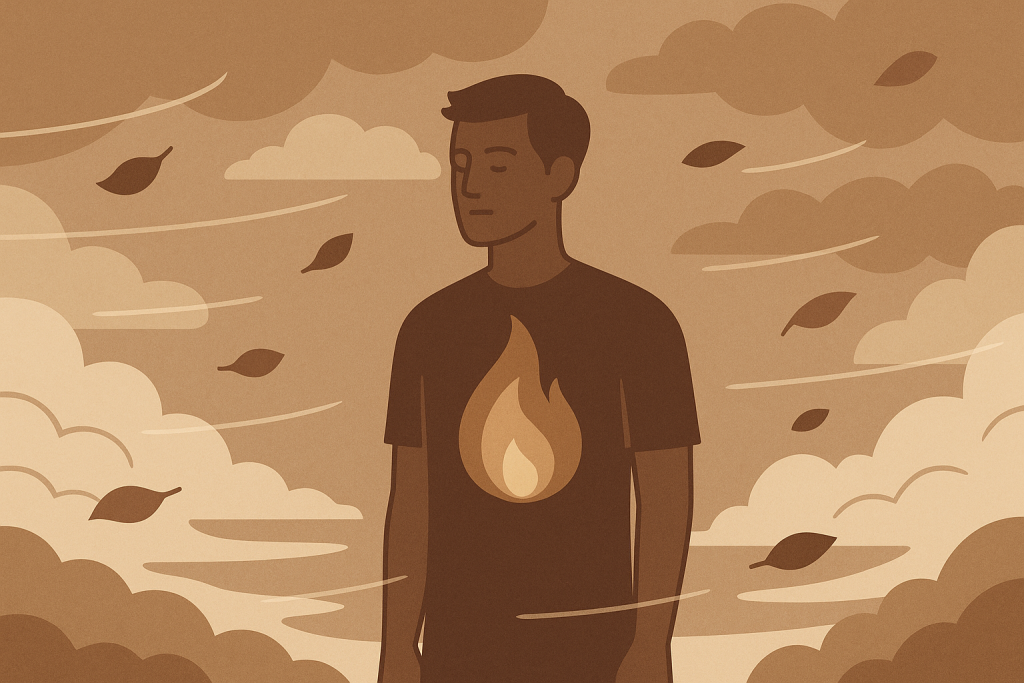
Emotional sobriety isn’t necessarily about abstaining from alcohol or drugs or any addiction. It’s about reclaiming your centre, especially when life wants to yank you in every direction at once. For a lot of men, this feels like trying to stand upright in a wind tunnel while still pretending everything is fine.
For years, emotional sobriety was my Holy Grail in recovery. I’d put the proverbial plug in the jug, but after my divorce I still didn’t feel emotionally sober. So I kept chasing it, working at it, failing at it, and circling back again and again. What I couldn’t see back then was that I was trying to build a house without ever touching the foundation.
Things didn’t start to shift until I walked into The Gatehouse and finally named my CSA and ACEs for what they were. That was the moment the whole picture changed. Those experiences were the roots of every addiction, every collapse, every rebuild. Once you strip away the slogans, the coins, the ritual wording, what’s left is something far more human and far more necessary: learning how to stay steady inside yourself, even when the outside world isn’t steady at all.
And that steadiness isn’t dramatic. It’s not heroic. It looks like this:
- Realizing you don’t have to react instantly.
- Choosing response over reflex.
- Feeling something fully without letting it drive the bus.
- Knowing a wave is coming and riding it instead of drowning under it.
Most men were never taught this language. We were taught “be strong,” “fix it,” “move on,” “don’t let it show.” Emotional sobriety is the opposite of that conditioning. It’s real strength — just not the kind we were raised to admire.
You know you’re starting to build it when:
- You notice you’re triggered before launching into damage control.
- You can name what’s happening internally without shame.
- You give yourself a beat to breathe instead of exploding or shrinking.
- You don’t rely on people, substances, work, or avoidance to regulate you.
- You can sit in discomfort without falling apart or numbing out.
And here’s the part most men never hear:
Emotional sobriety grows slowly, quietly, in the background.
It isn’t a mountaintop moment. It’s an accumulation of tiny self-respects.
The day you don’t apologize for having a boundary.
The moment you pause instead of reacting.
The first time you say, “I’m not okay,” without feeling like you failed.
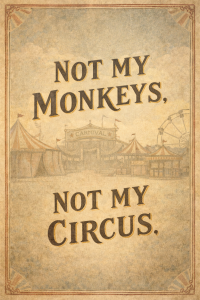
The moment you let someone else’s bad mood stay theirs instead of absorbing it like a sponge.
Progress shows up in hindsight — the moment you look back five years and think, Oh damn… I don’t fall apart the way I used to.
Because the truth is, emotional sobriety is inside-out work. No meetings, no steps, no sponsor can hand it to you. It comes from paying attention to your own story, your own body, your own patterns. And sometimes it comes from the moments you wish you could erase — the ones where you lost your footing and had to find your way back to steady ground.