I am grateful to Alcoholics Anonymous. Without it, I wouldn’t be alive.
It was in AA that I found sobriety, a spiritual path, and a deep love of service. AA saved me, full stop. It gave me the structure and grounding I needed to stop drinking and start living. Through AA, I met my ex-wife, who gave me my two beautiful daughters. For that alone, I will always be thankful.
AA gave me what I needed to become who I am today.
My sober date is August 17, 1986, I stopped going to meetings about 10 years later when my second daughter was born. With two kids, two dogs and two jobs, drinking was the last thing on my mind. So I took a sabbatical from meetings. When I returned to the rooms in 2013, it wasn’t because my sobriety was in danger. It was solid. I wasn’t fighting urges or teetering on the edge. What I was looking for, though I didn’t yet have language for it, was purpose. Fellowship. Companionship. A place to belong again.
That purpose showed up in the form of service.
I discovered that service is one of my love languages. I felt whole when I was helping others. I started the way most people do, making really bad coffee, setting up chairs, greeting at the door, chairing meetings, speaking when asked. When the opportunity to become a GSR came up, I took it. From there, I moved quickly through General Service, from GSR to Secretary, to Alternate DCM, and eventually DCM.
On the outside, it probably looked like commitment. On the inside, it felt like meaning.
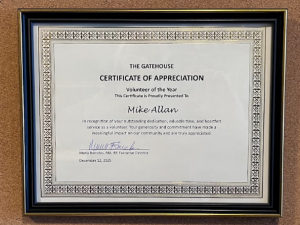
Around the time I became DCM, I had also started working on my childhood sexual abuse at The Gatehouse. That’s where something fundamental shifted.
For the first time, I began connecting the dots between my drinking and my childhood trauma. I remembered telling my first sponsor about the abuse years earlier, only to be told it was “no big deal,” that it happened to everyone, and that I should move on. So I did. Or at least, I thought I did.
At The Gatehouse, I learned what I hadn’t known then, that moving on isn’t the same as healing. That survival strategies don’t dissolve just because the behaviour stops.
As I found my voice in my healing work, I began to notice something painful in my service role. In my position as DCM, I technically had a seat at the table, but I didn’t have a voice. When a miscommunication occurred and I named it, I was accused of bullying. I was told I had no voice. Shortly after, I was removed from my position.
What broke me wasn’t the removal itself. It was the collision between two truths, I was learning to reclaim my voice, and I was being told, very clearly, that it didn’t belong there.
That was the moment I turned away from AA.
Not from sobriety. Not from the principles that saved my life. But from a structure that could no longer hold who I was becoming.
By then, I had found a new tribe. One that resonated even more deeply than recovery alone. One that made room for the parts of me that sobriety hadn’t touched.
In my mind, I had recovered from alcoholism. Alcohol no longer had power over me. My life, while still imperfect and occasionally unmanageable, was largely manageable. That’s when my internal framework shifted away from “recovery” and toward something else entirely.
A healing journey.
I couldn’t have started my journey without recovery. Recovery made healing possible. But healing asked different questions. Not “How do I not drink today?” but “Why did I need to disappear in the first place?”
Week five of Phase One at The Gatehouse, where we examine addictions, was a turning point. I remembered something I had said in high school, long before I ever had language for trauma. I used to joke that if you didn’t have a mom, you’d drink too.
I lost my mother at thirteen. While my CSA mattered, so did that loss. It was an ACE, an Adverse Childhood Experience, and it shaped me more than I realized. Alcohol wasn’t the problem. It was the solution I found when I didn’t have another one.
Today, I don’t frame my life primarily through recovery. I frame it through healing.
That doesn’t erase where I came from. It honours it.
Recovery gave me decades of life.
Healing gave those decades depth.
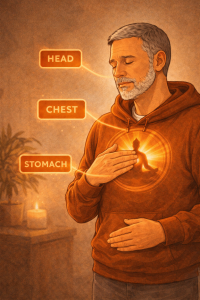
Now, my work is about helping others do the same, moving beyond survival, beyond coping, and into something steadier and more honest. Not from the outside in, but from the inside out.