A practical guide for noticing your early warning signs
Most men don’t realize they’re not okay until something forces the issue. The crash. The shutdown. The reaction they regret. The moment they snap. By the time those moments hit, the tank is already empty and the system is overwhelmed.
This isn’t a deep dive into your past or a request to unpack every emotion. This is about paying attention to what your body, mind, behaviour, and energy are already trying to tell you. Your early signals are the first line of support. When you can see them clearly, you can steady yourself before things slide out of reach.
Inside out healing starts with awareness, not perfection. Awareness gives you options. Options give you breathing room. Breathing room is where you rebuild.
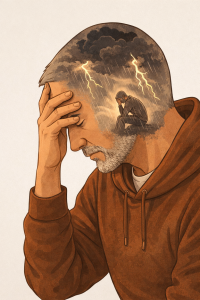
Your Body Usually Speaks First
Your body isn’t dramatic. It’s direct.
Signals might look like:
-
- tight jaw
-
- shallow breathing
-
- stomach knots
-
- restless energy
-
- tension in your shoulders or neck
-
- trouble sitting still
-
- trouble getting moving
-
- sudden fatigue
If you ignore these signals, they get louder. The sooner you notice them, the sooner you can shift out of survival mode and into steadier ground.
Your Mind Changes Pace
Your thoughts often change before your mood does.
Common signs include:
-
- racing mind
-
- scattered focus
-
- blanking out
-
- overthinking small things
-
- forgetting simple tasks
-
- everything feeling harder than it should
You don’t need to analyze every thought.
Just notice when your mind slips out of its usual rhythm.
Your Behaviour Sends Clues
Stress shows up in patterns long before burnout arrives.
-
- cancelling plans
-
- withdrawing
-
- snapping at people
-
- avoiding messages
-
- endless scrolling
-
- staying busy without doing anything meaningful
-
- overeating or losing appetite
These aren’t failures or character flaws. They’re signals.
Your Energy Tells the Truth
Even when your thoughts feel messy or your actions feel confusing, your energy rarely lies.
-
- feeling heavy
-
- feeling wired
-
- feeling numb
-
- feeling flat
-
- feeling agitated
-
- feeling disconnected
You don’t need perfect language for it. Naming the shift helps you regain control.
Why This Matters
When you learn your early signs, you stop calling yourself dramatic, weak, lazy, or scattered. You stop pushing past your limits without even realizing it. You stop blaming yourself for being human.
This is the heart of inside out healing:
Not fixing everything at once, but learning to see what’s happening inside you with honesty and without judgment.
Reframe:
“I’m not falling apart. I’m noticing what’s happening inside me.”
Reflection Questions
-
- What are the earliest signs that I’m not okay?
-
- Where do I notice stress first: body, mind, behaviour, or energy?
Small Action
Write down two early warning signs you tend to ignore.
Keep them somewhere you’ll see them.
Catching the slide early helps you rebuild before you break.
Checkpoint: My Early Signs
Check any that fit for you. You don’t need to explain them. Noticing is enough.
□ Body signals I tend to ignore
□ Mind signals I pretend aren’t happening
□ Behaviour patterns that show up under pressure
□ Energy shifts that tell the truth about how I’m doing
You don’t need all the answers.
You just need to see the signs as they show up.