When I stopped drinking, I thought the hardest part would be not taking the first drink.
That part was hard, no question. “Don’t take the first drink” and “one day at a time” were not slogans to me, they were lifelines. I leaned on them hard in early sobriety. Sometimes a day felt manageable. Sometimes it didn’t.
So I broke it down.
I won’t drink at lunch.
I won’t drink this afternoon.
I won’t drink for the next hour.
There were days when even an hour felt like a stretch. On those days, I remember breaking it down to something smaller.
I won’t drink for this song.
That was early sobriety for me. Not noble. Not graceful. Just practical.
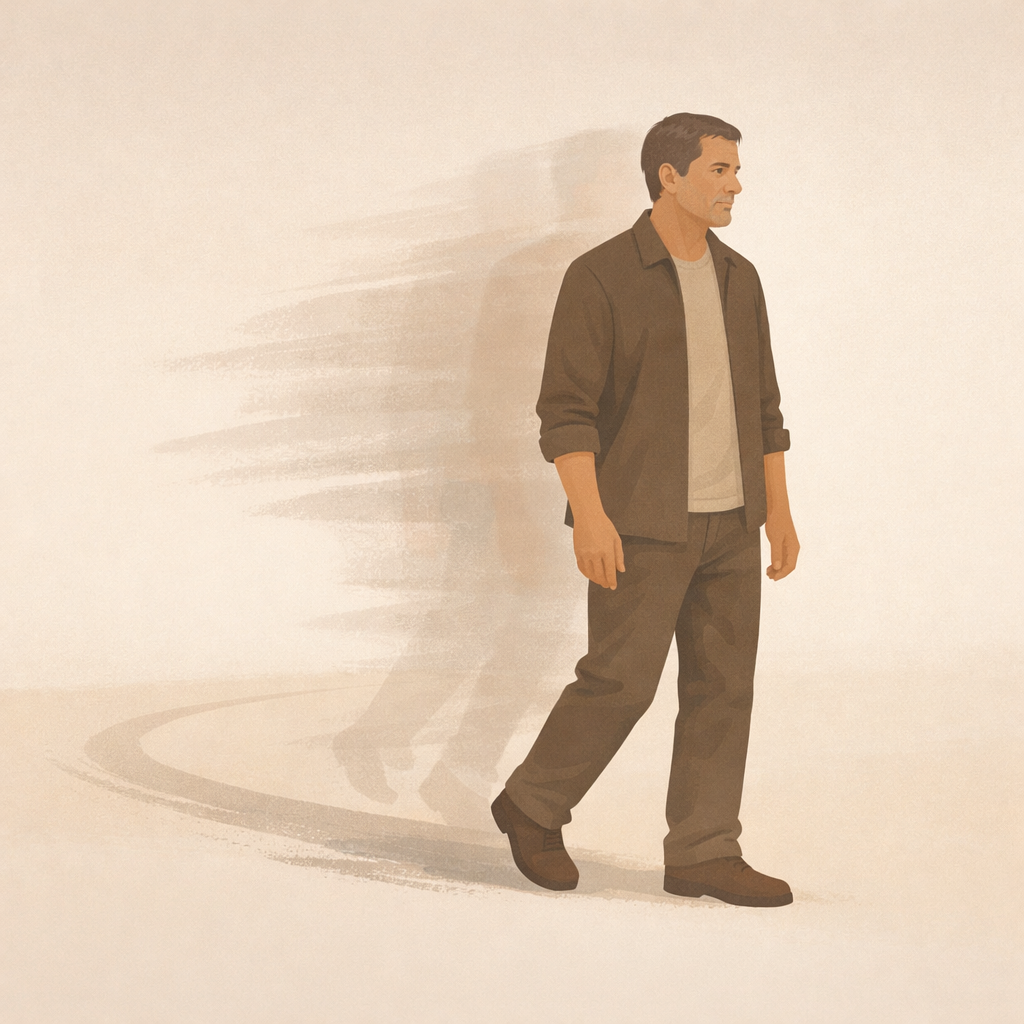
What I didn’t realize at the time was that while I wasn’t drinking, I was still running.
I ran into work.
I ran into responsibilities.
I ran into being useful, productive, helpful, dependable.
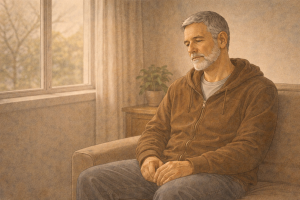
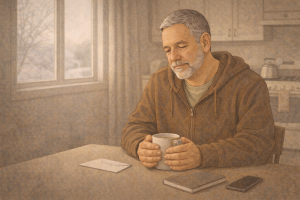
I filled my days quickly. Quiet felt dangerous. Stillness felt like temptation. If I stayed busy enough, moving enough, improving enough, maybe I wouldn’t have to sit with myself for too long.
I honestly believed that sobriety meant forward motion only.
Stopping felt risky.
AA helped keep me sober. The structure mattered. The rooms mattered. The language mattered. One day at a time wasn’t just about alcohol, it was about survival. It gave me something solid to hold onto when my thinking was anything but.
But what no one told me, and what I couldn’t have heard anyway, was that you can quit drinking and still be trying to outrun yourself.
I didn’t slow down because I thought slowing down might undo everything I was building. I worried that if I stopped moving, the urge would catch up with me. That old feelings would show up. That regret, shame, grief, or fear would knock on the door.
So I stayed in motion.
From the outside, it probably looked like progress. Inside, it felt like white-knuckling life, even while sober.
The shift didn’t happen all at once. There wasn’t a single moment of insight. It came quietly, through exhaustion more than wisdom.
I started to notice that no matter how busy I stayed, I still brought myself with me. The same wiring. The same restlessness. The same habit of pushing through instead of checking in.
Sobriety wasn’t asking me to outrun who I had been. It was asking me to stay.
That was a much harder assignment.
Early Sobriety Lessons Learned
Over time, “one day at a time” began to soften. It stopped being only about not drinking and started becoming about how I lived inside the day. How fast I moved. How much pressure I put on myself. How often I ignored my body’s signals in the name of doing more.
I learned that breaking time into pieces wasn’t a weakness, it was wisdom. The same way I once didn’t drink for one song at a time, I could now rest for one evening at a time. Say no for one weekend. Leave space in one afternoon.
I also learned that not taking the first drink applied to more than alcohol.
I didn’t have to take the first rush.
The first overcommitment.
The first escape disguised as productivity.
That realization changed things.
If early sobriety taught me anything, it’s this: you don’t fail because you need things smaller than others do. You survive because you know how to make things small enough to carry.
If you’re sober and restless, you’re not doing it wrong.
If slowing down scares you, that makes sense.
If quiet feels louder than noise ever did, you’re not alone.
Sometimes sobriety is one day at a time.
Sometimes it’s one hour.
Sometimes it’s one song.
And sometimes the real work isn’t staying ahead of yourself, it’s learning you don’t have to run at all.
You’re already here.